
Anúncios
Digital Braille reading apps are revolutionizing accessibility, empowering visually impaired users to engage with content independently through innovative smartphone technology.



For millions of people worldwide, accessing written information has traditionally required specialized hardware or physical Braille materials that can be expensive and difficult to obtain.
Anúncios
The emergence of digital Braille applications represents a significant leap forward in assistive technology, bringing powerful reading tools directly to the devices already in our pockets.

These applications leverage smartphone capabilities to convert digital text into Braille format, enabling users to read books, articles, messages, and documents with unprecedented convenience.
Anúncios
The technology bridges the gap between the digital world and tactile reading systems, creating new opportunities for education, employment, and personal enrichment.
📱 Understanding Digital Braille Technology
Digital Braille reading applications transform standard text into Braille code that can be displayed on screen or connected to refreshable Braille displays.
Unlike traditional embossed paper, digital Braille offers dynamic content that updates instantly, allowing users to navigate through documents fluidly without carrying bulky materials.
The technology works by converting Unicode text characters into corresponding Braille patterns based on internationally recognized Braille standards.
Most applications support multiple Braille codes, including Grade 1 (uncontracted), Grade 2 (contracted), and specialized codes for mathematics, music notation, and various languages.
Modern implementations integrate optical character recognition (OCR) capabilities, enabling users to photograph printed text and instantly convert it to readable Braille format.
This functionality transforms everyday interactions—from reading restaurant menus to scanning product labels—making independent living more achievable.
🔍 Key Components of Braille Reading Apps
Successful digital Braille applications combine several technological elements to deliver seamless experiences:
- Text-to-Braille conversion engines that accurately translate between writing systems
- Screen reader integration allowing dual-mode accessibility with audio feedback
- Camera-based scanning for capturing physical text in real-time
- Customizable display settings to accommodate individual reading preferences
- Cloud synchronization enabling access to personal libraries across devices
- Bluetooth connectivity supporting external Braille display hardware
🌟 Transformative Benefits for Users
The impact of digital Braille applications extends far beyond simple text conversion.
These tools fundamentally reshape how visually impaired individuals interact with information, education, and entertainment throughout their daily lives.
Educational opportunities expand dramatically when students can access textbooks, research materials, and classroom resources instantly through their smartphones.
Rather than waiting for specialized materials to be produced, learners can engage with content simultaneously with their sighted peers, fostering inclusion and academic equality.
Professional environments also benefit significantly.
Digital Braille enables workers to read emails, reports, and documents independently, participate fully in meetings through prepared materials, and maintain productivity without relying on assistance from colleagues.
💼 Professional Applications
In workplace settings, digital Braille technology proves invaluable across numerous scenarios. Customer service representatives can read client information discreetly during calls.
Legal professionals can review documents privately. Educators can prepare lesson plans and grade assignments efficiently.
The portability factor cannot be overstated. While traditional Braille books occupy considerable space—a single novel might fill several large volumes—digital libraries store thousands of titles in a device that fits comfortably in a pocket or purse.
🎯 Essential Features to Look For
When selecting a digital Braille reading application, certain features distinguish exceptional tools from basic offerings.
Understanding these capabilities helps users identify solutions that best match their specific needs and usage patterns.
Accuracy in text conversion ranks as the most critical consideration.
The application must reliably translate between standard text and Braille without introducing errors that could confuse meaning or compromise comprehension.
Support for contracted Braille becomes particularly important for experienced readers seeking efficiency.
⚙️ Advanced Functionality
Premium applications incorporate sophisticated features that enhance the overall reading experience:
- Multi-language support enabling reading in numerous languages with appropriate Braille codes
- Document format compatibility including PDF, EPUB, Word, and plain text files
- Annotation capabilities allowing users to mark passages and add personal notes
- Search functionality for quickly locating specific content within documents
- Reading history tracking to resume exactly where you left off
- Adjustable reading speed when using auto-scroll features
User interface design also matters tremendously. The application should employ intuitive gestures and navigation patterns that feel natural for screen reader users.
Clear audio feedback confirms actions, while logical menu structures minimize the learning curve.
📚 Building Your Digital Braille Library
One of the most exciting aspects of digital Braille technology involves accessing vast collections of reading material.
Numerous online sources provide Braille-formatted books, ranging from classic literature to contemporary bestsellers, academic journals to news publications.
Many applications integrate with digital library services that specialize in accessible formats.
Organizations like Bookshare, the National Library Service for the Blind and Print Disabled, and various international equivalents offer extensive catalogs available through compatible reading apps.
Personal document conversion represents another valuable capability.
Users can import their own files—whether personal correspondence, work documents, or downloaded web content—and instantly render them in readable Braille format.
This flexibility ensures that virtually any text-based material becomes accessible.
🌐 Content Sources and Accessibility
The digital landscape offers numerous pathways for obtaining Braille-ready content:
| Source Type | Content Available | Access Method |
|---|---|---|
| Specialized Libraries | Books, magazines, textbooks | Membership or registration |
| Public Domain Collections | Classic literature, historical documents | Free download |
| News Services | Current events, journalism | Subscription or free access |
| Educational Platforms | Academic materials, courses | Institutional access |
| Personal Documents | User-owned files and conversions | Direct import |
🔧 Optimizing Your Reading Experience
Maximizing the effectiveness of digital Braille applications requires understanding customization options and developing efficient usage habits.
Most applications offer extensive personalization features that accommodate individual reading styles and preferences.
Display settings warrant careful attention. Users can typically adjust dot representation size, spacing between characters, and the number of cells shown simultaneously.
Finding the optimal configuration often requires experimentation, but the investment pays dividends in reading comfort and speed.
Gesture customization allows mapping specific swipe patterns or tap sequences to frequently used commands.
Power users often create personalized control schemes that minimize navigation steps, enabling faster movement through documents and quicker access to essential functions.
💡 Pro Tips for Efficient Reading
Experienced users share several strategies for enhancing productivity with digital Braille apps:
- Create custom reading profiles for different contexts (studying, leisure reading, work documents)
- Use bookmarks liberally to mark important passages for future reference
- Explore keyboard shortcuts if using an external Braille keyboard
- Enable haptic feedback for tactile confirmation of navigation actions
- Organize your library with folders and tags for quick content retrieval
- Schedule regular app updates to access new features and improvements
🌍 Global Impact and Community Building
Digital Braille reading applications contribute significantly to fostering inclusive communities and expanding opportunities worldwide.
In developing regions where traditional Braille materials are scarce or prohibitively expensive, smartphone-based solutions provide affordable access to literacy and education.
Online communities centered around these technologies facilitate knowledge sharing, troubleshooting assistance, and social connection among users.
Forums, social media groups, and dedicated discussion platforms enable people to exchange tips, recommend content, and support one another in navigating digital accessibility tools.
The technology also promotes cultural exchange and language learning.
Users can explore literature from different countries, study foreign languages through Braille instruction, and engage with diverse perspectives that might otherwise remain inaccessible.
🤝 Advocacy and Awareness
As digital Braille applications become more sophisticated and widely adopted, advocacy efforts focus on ensuring continued development, improving standards, and expanding availability.
User feedback drives innovation, with developers responsive to community needs and suggestions.
Organizations dedicated to accessibility rights leverage these technologies to demonstrate the viability of inclusive design.
When businesses, educational institutions, and government agencies recognize the capabilities enabled by digital Braille, they become more motivated to ensure their content and services accommodate these tools.
🚀 Future Developments and Innovations
The trajectory of digital Braille technology points toward increasingly seamless integration with artificial intelligence, augmented reality, and haptic feedback systems.
Emerging innovations promise to further dissolve barriers between visually impaired users and the information ecosystem.
Machine learning algorithms continue improving OCR accuracy, especially for handwritten text, complex layouts, and low-quality images.
Real-time translation capabilities will soon enable instant conversion between languages while maintaining Braille formatting, opening new possibilities for international communication.
Integration with smart home systems and internet-of-things devices expands the utility beyond traditional reading.
Imagine receiving Braille notifications from appliances, accessing recipe instructions while cooking, or navigating smart buildings through tactile wayfinding systems connected to your reading app.
🔮 Anticipated Technological Advances
Several promising developments are currently in research and early implementation phases:
- Advanced haptic displays providing richer tactile feedback through smartphone screens
- Neural interface experiments exploring direct brain-to-Braille signal processing
- Augmented reality integration offering spatial audio cues combined with Braille output
- Collaborative reading features enabling shared annotations and group discussions
- Predictive text enhancement suggesting content based on reading habits and preferences
🎓 Learning Resources and Getting Started
For newcomers to digital Braille reading, numerous resources facilitate smooth onboarding and skill development.
Most applications include comprehensive tutorials that guide users through basic operations, gradually introducing advanced features as comfort levels increase.
Organizations specializing in visual impairment support offer training programs, webinars, and one-on-one instruction for those transitioning from traditional Braille or learning the system for the first time.
These structured learning environments provide supportive communities where questions are welcomed and progress is celebrated.
YouTube channels, podcasts, and accessible blogs created by experienced users offer practical demonstrations and real-world usage scenarios.
Hearing how others integrate these tools into their daily routines provides inspiration and actionable strategies for maximizing benefits.
📖 Starting Your Digital Braille Journey
Taking the first steps with digital Braille reading apps involves several straightforward actions:
- Download a reputable application compatible with your device operating system
- Complete the initial setup wizard to configure basic preferences
- Practice with sample documents included in most apps
- Connect with user communities for support and recommendations
- Gradually explore advanced features as confidence builds
- Provide feedback to developers to help improve the technology
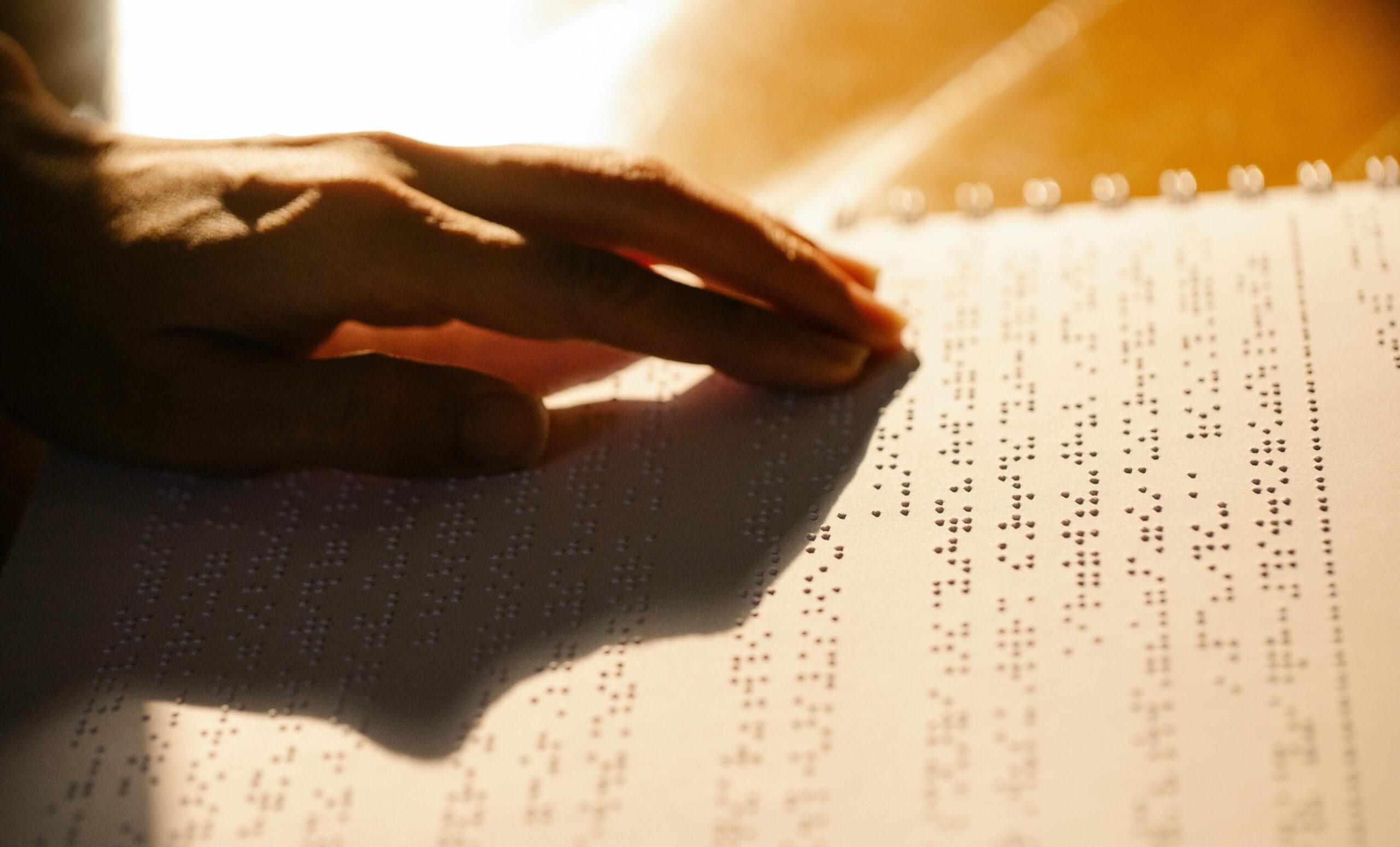
✨ Embracing Independence Through Technology
Digital Braille reading applications represent far more than technological novelties—they embody fundamental shifts toward accessibility, independence, and equal participation in society.
By placing powerful reading tools directly in the hands of visually impaired individuals, these innovations dismantle longstanding barriers to information access.
The personal impact extends beyond practical functionality to touch on dignity, self-sufficiency, and confidence.
When someone can independently read a menu at a restaurant, review a contract before signing, or enjoy a novel without assistance, they experience a profound sense of empowerment that reverberates through all aspects of life.
As technology continues evolving, the vision of truly universal accessibility moves closer to reality.
Digital Braille reading apps serve as powerful reminders that thoughtful innovation—guided by user needs and developed with inclusive principles—can transform lives in meaningful ways.
The journey toward comprehensive accessibility requires ongoing commitment from developers, advocates, users, and society at large.
Each advancement in digital Braille technology, each new feature implemented, and each barrier removed represents progress toward a world where information access knows no boundaries.
Whether you’re exploring these tools for the first time or seeking to deepen your engagement with digital Braille reading, the opportunities available today surpass anything previously imaginable.
The combination of portability, affordability, and functionality creates unprecedented possibilities for learning, working, and connecting with the world around us. 📲✨
