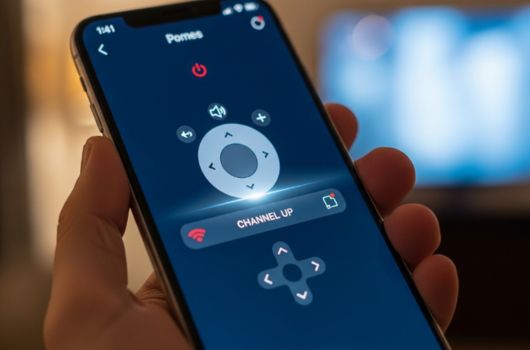
Remote control apps are transforming how we interact with our devices, offering seamless control over TVs, air conditioners, and smart home gadgets from a single smartphone.

Gone are the days of juggling multiple physical remotes or frantically searching between couch cushions for that one missing controller. The digital revolution has brought us a practical solution that fits right in our pockets, making device management simpler and more intuitive than ever before.
Whether you’ve lost your TV remote, want to control your air conditioning from bed, or dream of managing your entire smart home ecosystem from one screen, remote control apps deliver unprecedented convenience. Let’s explore how these innovative tools work and why they’ve become essential for modern living.
📱 What Makes Remote Control Apps Essential Today
Our homes are filled with more electronic devices than ever before. Smart TVs, streaming boxes, sound systems, air conditioners, lights, and even kitchen appliances now come with their own remotes. This creates clutter and confusion, especially when you just want to relax and watch your favorite show.
Remote control apps consolidate all these functions into your smartphone—a device you already carry everywhere. This transformation isn’t just about convenience; it’s about creating a more connected, efficient living space that responds to your needs without the hassle of managing multiple controllers.
Modern remote apps use infrared technology, Wi-Fi connectivity, or Bluetooth to communicate with your devices. Many smartphones come equipped with IR blasters specifically for this purpose, while others rely on network-based communication. The result is the same: comprehensive control at your fingertips.
🎯 Core Features That Define Quality Remote Control Apps
Not all remote control applications are created equal. The best ones share several key characteristics that set them apart from basic offerings. Understanding these features helps you choose the right solution for your specific needs.
Universal Compatibility Across Devices
Top-tier remote apps support thousands of brands and models. From Samsung and LG TVs to Daikin air conditioners and Sony sound systems, comprehensive device libraries ensure you can control virtually any infrared-enabled appliance. The app should automatically detect compatible devices or allow manual configuration through brand and model selection.
Intuitive User Interface Design
A cluttered, confusing interface defeats the purpose of simplification. The best apps feature clean layouts with clearly labeled buttons, customizable themes, and logical navigation. You shouldn’t need a tutorial to change channels or adjust volume—the interface should feel natural from your first interaction.
Customizable Remote Layouts
Everyone uses their devices differently. Quality apps allow you to customize button arrangements, create macros for frequently used commands, and even design entirely personalized remote layouts. This flexibility transforms a generic controller into one tailored specifically to your habits and preferences.
Smart Home Integration
The future of home control lies in interconnected systems. Leading remote apps integrate with platforms like Google Home, Amazon Alexa, and Apple HomeKit, allowing voice commands and automated routines. Imagine saying “movie time” and having your TV turn on, lights dim, and streaming service launch automatically.
🔧 How to Set Up Your Remote Control App
Getting started with a remote control app is straightforward, even for those who aren’t particularly tech-savvy. The process typically follows these simple steps that have you controlling devices within minutes.
First, download your chosen app from the official store and grant necessary permissions, particularly for infrared functionality if your phone supports it. The app may request access to your local network to discover Wi-Fi-enabled smart devices.
Next, add your devices either through automatic detection or manual selection. Many apps scan for nearby devices and present a list of compatible options. If automatic detection doesn’t work, you can browse by brand and model number, usually found on the device itself or in its documentation.
Test each function to ensure proper communication between your phone and the device. Press the power button, adjust volume, and try changing channels or inputs. If certain buttons don’t work, the app typically offers alternative code sets or the ability to learn commands directly from your physical remote.

📺 Controlling Your Television Like Never Before
Television control represents the most common use case for remote apps, and developers have refined this experience to near-perfection. Beyond basic functions like power and volume, modern apps offer sophisticated features that enhance your viewing experience.
Channel guides integrate directly into the app, showing current programming across all your subscribed services. You can browse, search, and select shows without ever touching the physical remote. Some apps even remember your favorite channels and create quick-access shortcuts for one-tap navigation.
Smart TVs connected to your network unlock additional capabilities. You can browse streaming apps, enter text using your phone’s keyboard (much easier than navigating on-screen keyboards with arrow buttons), and even mirror content from your phone to the big screen.
For those with multiple TVs throughout their home, room-based profiles ensure you’re controlling the correct television. Simply select which room you’re in, and the app switches to the appropriate remote configuration automatically.
❄️ Climate Control From Anywhere in Your Home
Air conditioner control has become increasingly popular in remote apps, particularly in regions with extreme temperatures. The ability to adjust your home’s climate without getting up offers comfort that goes beyond simple convenience.
Temperature adjustments, fan speed changes, and mode switching (cooling, heating, dehumidifying) all happen through simple taps. Many apps display the current temperature and your target setting, making it easy to fine-tune your environment precisely.
Scheduling features let you program temperature changes throughout the day. Set your AC to cool the bedroom an hour before bedtime, or warm the bathroom before your morning shower. These automated routines save energy while ensuring comfort exactly when you need it.
For split-system units with multiple indoor heads, zone control becomes effortless. Adjust each room’s temperature independently without walking through your entire home, creating personalized climate zones that accommodate different preferences and usage patterns.
🏠 Building Your Complete Smart Home Ecosystem
Remote control apps serve as excellent entry points into comprehensive smart home management. What starts as simple TV control often expands into full-home automation as you discover the possibilities these platforms offer.
Lighting control integration means adjusting brightness and color temperature without installing expensive smart switches. If your lights have infrared receivers or connect to your Wi-Fi network, they can join your unified control system seamlessly.
Sound system management becomes centralized, whether you’re controlling a traditional stereo, soundbar, or multi-room audio setup. Volume adjustments, input selection, and even equalizer settings move to your smartphone, eliminating the need for yet another dedicated remote.
Scene creation ties everything together beautifully. A “Good Morning” scene might open smart blinds, turn on the coffee maker, start your favorite news channel, and set the thermostat to your preferred daytime temperature—all triggered by a single button press or scheduled time.
🔋 Battery Life and Performance Considerations
A common concern about remote control apps involves their impact on smartphone battery life. While any active application consumes power, well-designed remote apps minimize this drain through efficient coding and smart resource management.
Infrared transmission uses minimal power since it requires only brief bursts of light invisible to the human eye. Wi-Fi-based control consumes slightly more energy but remains negligible compared to activities like video streaming or gaming.
Background processes should be minimal. Quality apps don’t constantly poll your devices or maintain unnecessary connections when not in active use. Check your phone’s battery usage statistics after a few days of use—a good remote app typically accounts for less than 2% of daily battery consumption.
To maximize efficiency, enable power-saving features within the app if available, and close the application completely when not needed rather than leaving it running in the background indefinitely.
🛡️ Security and Privacy in Remote Control Applications
Whenever technology connects to your home devices and network, security deserves serious consideration. Understanding how remote control apps handle your data and protect your privacy helps you make informed decisions about which solutions to trust.
Reputable apps use local network communication whenever possible, meaning commands travel directly from your phone to your device without routing through external servers. This approach minimizes data exposure and maintains functionality even if your internet connection fails.
For cloud-connected features like remote access or voice integration, look for apps that employ encryption protocols protecting your commands and usage data from interception. Privacy policies should clearly explain what information gets collected and how it’s used.
Permission requests should make sense. A remote control app needs network access and, if applicable, infrared permissions, but shouldn’t require access to your contacts, messages, or other unrelated data. Be cautious of apps with excessive permission demands that can’t be justified by their functionality.
🌐 Remote Access: Controlling Devices From Anywhere
One of the most impressive capabilities of modern remote control apps is the ability to manage your devices even when you’re away from home. This feature transforms local control into true remote management with practical applications beyond simple convenience.
Forgot to turn off the TV before leaving for vacation? No problem—shut it down from your hotel room. Want to cool your home before arriving on a hot summer afternoon? Start the air conditioner from your office. This connectivity provides peace of mind and comfort that traditional remotes can never match.
Remote access typically requires your devices to be connected to a smart hub or the app’s cloud service. Your commands travel through the internet to your home network, then to the specific device. While this introduces slight delays compared to local control, the trade-off for anywhere-access often proves worthwhile.
Security becomes even more critical with remote access enabled. Ensure your home network uses strong passwords, enable two-factor authentication on your remote control account if available, and regularly update both the app and your router’s firmware to patch potential vulnerabilities.
💡 Troubleshooting Common Remote Control App Issues
Even the best technology occasionally encounters hiccups. Knowing how to resolve common issues quickly gets you back to seamless device control without frustration or unnecessary technical support calls.
Device Not Responding to Commands
First, verify your phone’s infrared sensor (if applicable) isn’t blocked by a case or debris. Point directly at the device sensor, usually located near the power indicator light. For Wi-Fi devices, confirm both your phone and the device connect to the same network.
Incomplete Button Functionality
If some buttons work while others don’t, try alternative code sets for your device model. Most apps offer multiple code options since manufacturers sometimes change remote protocols between production runs. The “learn” function, if available, lets you train the app by pointing your physical remote at your phone.
Connection Drops or Lag
Network-based control depends on Wi-Fi stability. Router placement, interference from other devices, and network congestion all affect performance. Try moving closer to your router, reducing the number of connected devices, or upgrading to a dual-band router that separates high-bandwidth activities from control signals.
App Crashes or Freezes
Clear the app’s cache through your phone’s settings, ensure you’re running the latest version, and verify your operating system is up to date. If problems persist, uninstall and reinstall the application, which often resolves corrupted data issues.
🎨 Customization Options That Enhance Daily Use
The true power of remote control apps emerges when you move beyond default configurations and personalize the experience to match your specific lifestyle and preferences. Customization transforms a generic tool into an extension of how you naturally interact with technology.
Widget creation brings frequently used controls to your home screen or lock screen. Adjust volume, change channels, or toggle devices on and off without even opening the full app. This saves precious seconds and makes quick adjustments feel effortless.
Macro commands combine multiple actions into single-button presses. Create a “Movie Night” macro that dims lights, turns on the TV, launches Netflix, and adjusts the soundbar volume—all from one tap. These automated sequences eliminate repetitive button pressing and create seamless transitions between activities.
Custom layouts let you arrange buttons exactly how you want them. If you rarely use certain functions, hide them to reduce clutter. If you constantly adjust specific settings, make those buttons larger and more prominent. The remote becomes uniquely yours, optimized for your habits rather than forcing you to adapt to someone else’s design choices.
👨👩👧👦 Family-Friendly Features and Parental Controls
Remote control apps offer benefits for entire households, not just tech enthusiasts. Family-focused features make these tools accessible to children, helpful for elderly relatives, and useful for managing shared spaces effectively.
Simplified interfaces can be created for children or less tech-savvy family members. Hide advanced settings and present only essential controls with large, clearly labeled buttons. This reduces confusion and prevents accidental changes to device configurations.
Parental control integration lets you manage what content children can access on smart TVs and streaming devices. Set viewing time limits, block inappropriate channels, and receive notifications when restricted content is attempted—all managed through the remote app’s settings.
Multiple user profiles ensure each family member has their own customized experience. Dad’s profile might include all his favorite sports channels with one-tap access, while Mom’s profile features her preferred streaming services and room temperature settings. Kids get age-appropriate content with automatic bedtime shutdowns.
🔮 The Future of Remote Control Technology
Remote control apps continue evolving rapidly, incorporating emerging technologies that promise even more intuitive and powerful ways to interact with our devices. Understanding these trends helps you anticipate what’s coming and choose solutions positioned for long-term relevance.
Artificial intelligence integration is making remotes smarter. Apps learn your habits and make proactive suggestions: “You usually watch the news at this time—would you like me to turn on the TV?” Predictive controls anticipate your needs based on patterns, time of day, and even factors like weather or calendar events.
Voice control continues improving beyond basic commands. Natural language processing understands complex requests like “find that documentary about ocean conservation we watched last month” rather than requiring specific phrasing or navigation through menus.
Gesture controls using your phone’s accelerometer and gyroscope create intuitive interactions. Wave your phone to adjust volume, shake to power off devices, or draw patterns in the air to execute custom commands. These motion-based controls feel natural and engaging, especially for gaming or media applications.
Cross-platform synchronization ensures your custom configurations, preferences, and macros follow you across devices. Set up your perfect remote layout on your phone, and it automatically appears on your tablet, smartwatch, or any other device running the app.
✨ Maximizing Value From Your Remote Control App
Simply installing a remote control app provides immediate benefits, but truly maximizing its potential requires exploring features beyond basic button presses. These advanced strategies unlock capabilities that transform how you interact with your entire home environment.
Integration with productivity tools creates surprising synergies. Connect your calendar to automatically adjust climate settings based on your schedule, turning down heating when you’re away and warming the house before you return. Link to weather services for automatic adjustments when temperatures spike or drop unexpectedly.
Energy monitoring features available in some apps track how long devices remain powered on, helping identify opportunities to reduce electricity consumption. Set automatic shutoff timers for devices that don’t need to run continuously, potentially lowering your utility bills while reducing environmental impact.
Guest mode provides temporary access for visitors without sharing your full configuration. Create simplified remotes for specific rooms or devices that guests might use, ensuring they can control the TV or air conditioning without accidentally changing your carefully crafted settings.
Backup and restoration features protect your custom configurations. After spending time perfecting layouts, macros, and device settings, the last thing you want is to lose everything if you change phones. Cloud backups ensure seamless transitions to new devices and quick recovery if you need to reinstall the app.
🎁 Choosing the Right Remote Control App for Your Needs
With countless remote control apps available, selecting the ideal solution requires evaluating your specific requirements, devices, and expectations. Consider these factors to identify the best match for your situation.
Device compatibility tops the priority list. Verify the app supports all your existing devices before committing time to setup. Check recent reviews to ensure continued support, as developers sometimes discontinue updates for older models or brands.
User reviews provide valuable insights into real-world performance. Look beyond star ratings to read detailed feedback about reliability, customer support responsiveness, and how well the app performs with devices similar to yours. Pay attention to recent reviews rather than older ones, as app quality can change significantly with updates.
Pricing models vary widely. Some apps offer full functionality for free with occasional ads, others charge one-time purchase fees, and many use subscription models with monthly or annual payments. Evaluate what makes sense for your budget and how much you’ll actually use the advanced features that justify ongoing costs.
Developer reputation and update frequency indicate long-term viability. Apps from established developers with regular updates are more likely to maintain compatibility as devices and operating systems evolve. Check the update history to see how actively the app is maintained and improved.
Remote control apps represent a practical convergence of convenience, innovation, and smart home integration. They eliminate clutter, simplify device management, and open possibilities for automation that traditional remotes could never achieve. Whether you’re looking to replace a lost remote, reduce the number of controllers cluttering your living room, or build a comprehensive smart home ecosystem, these applications deliver impressive capabilities that continue expanding with each update. The transition from physical remotes to smartphone control isn’t just about keeping up with technology—it’s about creating a more responsive, personalized living environment that adapts to your needs effortlessly.
